
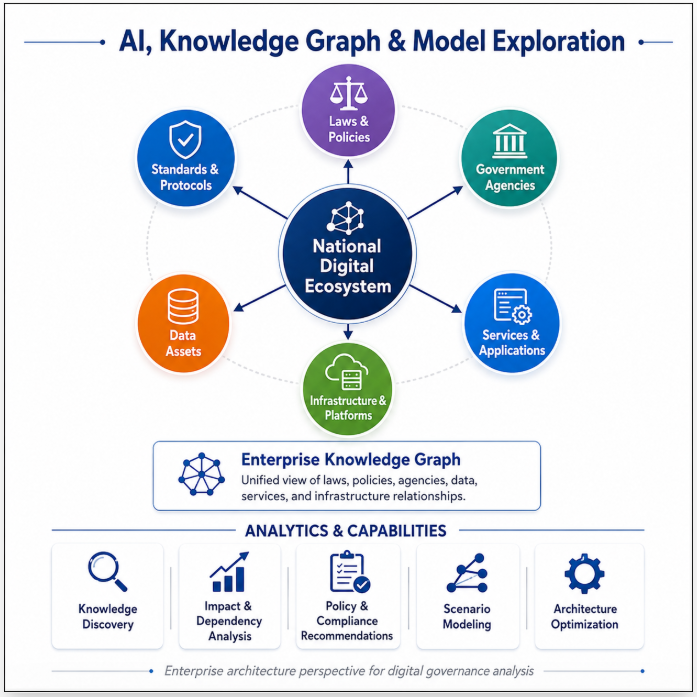
I recently developed a Philippine DICT / IT Legal Architecture Map after observing a common trend in digital transformation discussions.
We talk about technology in pieces. Cybersecurity is discussed separately. Data privacy is discussed separately. Digital identity is discussed separately. Connectivity, e-governance, e-commerce, cloud, payments, and AI are often addressed in isolation.
But in real transformation Enterprise Architecture work, they are not separate. They are threads in the same digital fabric.
Why this matters
A digital government platform cannot function without connectivity. Digital services do not scale without identity and interoperability. Online transactions do not create trust without privacy, cybersecurity, and accountability. AI cannot be responsibly adopted without data governance, model risk controls, and human oversight.
This is why I believe laws and policies should be viewed not only as compliance references, but also as drivers of architectural decisions.
From legal compliance to architectural thinking
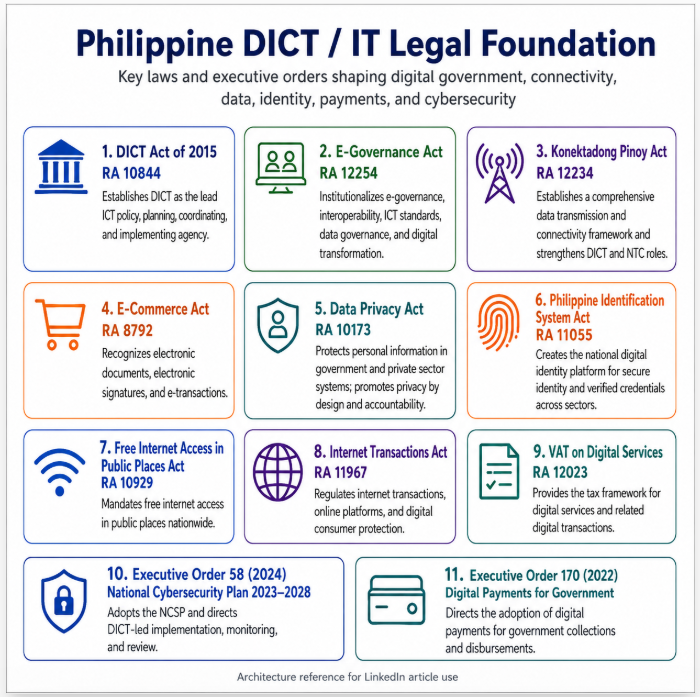
When I reviewed laws and policies such as the DICT Act of 2015, the E-Governance Act, the Konektadong Pinoy Act, the E-Commerce Act, the Data Privacy Act, the Philippine Identification System Act, and the National Cybersecurity Plan, I did not see them as isolated documents.
I consider them components of a broader digital operating model. Each one enables or governs a capability:
DICT Act
Establishes the institutional direction for ICT.
E-Governance Act
Pushes digital services, interoperability, and citizen-centric delivery.
Konektadong Pinoy Act
Supports the connectivity and data transmission layer.
E-Commerce Act
Gives recognition to electronic documents, signatures, and transactions.
Data Privacy Act
Requires architects to consider responsible data use and personal information protection.
PhilSys and Cybersecurity
Supports trusted digital identity while strengthening the security and resilience layer.
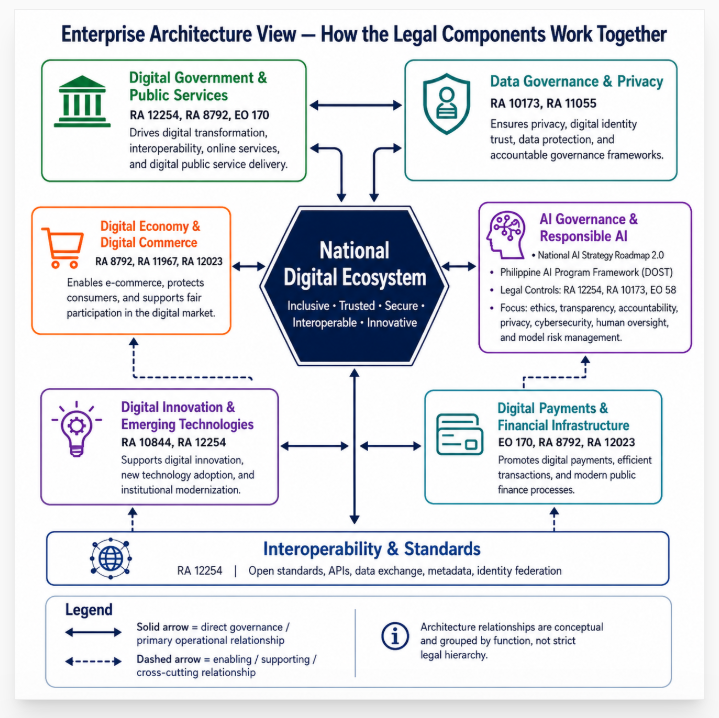
Together, these serve as more than legal references; they form a blueprint for designing, governing, and operating digital capabilities.
Why this matters to Enterprise Architects
As Enterprise Architects, we are expected to simplify complexity. However, complexity is not always technical; it can also be legal, organizational, operational, or political.
Effective architecture should address questions such as: how digital identity supports online services, how privacy affects data platform design, how cybersecurity influences cloud architecture, how AI should be governed when there is no single AI law yet, and how vendors should align their solutions to national digital priorities.
These questions are not just for lawyers, governance, or compliance teams. They are architecture questions.
Why this matters to Solution Architects and vendors
For Solution Architects, this type of map grounds solution design in practical realities. A solution should be scalable, secure, and modern, but must also align with the legal and governance environment in which it operates.
This consideration is equally important for vendors. Many technology proposals are still product-first. They focus on features, tools, platforms, and technical differentiators.
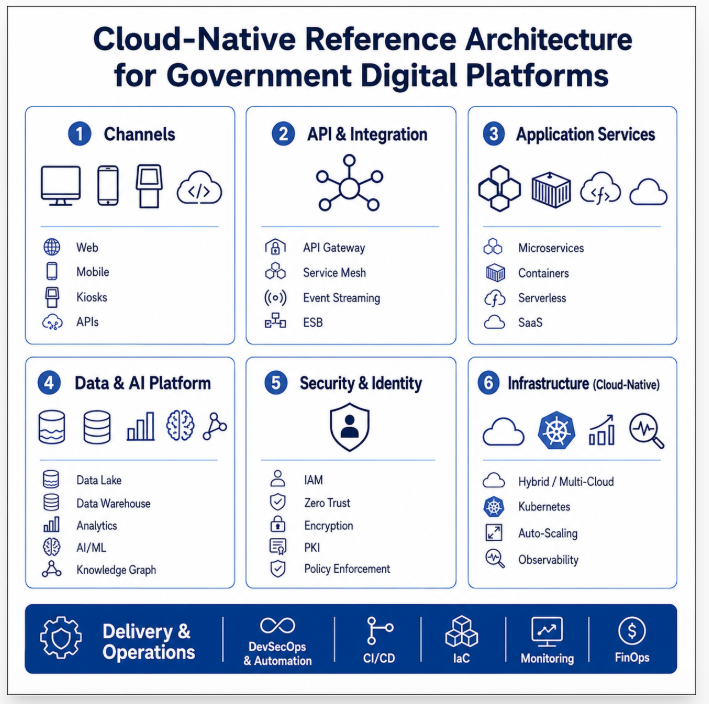
For government and regulated industries, a capability-first and governance-aware approach is more effective. A cloud solution should connect to digital service delivery. A cybersecurity solution should connect to resilience and national cybersecurity direction. A data platform should connect to privacy, interoperability, and trusted decision-making. An AI solution should align with responsible AI, human oversight, transparency, and data governance.
AI governance needs to be visible
One area I wish to highlight is AI governance. The Philippines does not yet have a comprehensive AI law, unlike some other jurisdictions that are developing such laws. However, this does not mean AI is ungoverned.
AI governance can already be anchored on responsible data use, cybersecurity, privacy, e-governance, transparency, accountability, and emerging national AI strategy.
Policy anchors
National AI Strategy Roadmap 2.0 and the Philippine AI Program Framework.
Legal controls
RA 12254, RA 10173, and EO 58 as governance reference points.
Operating principles
Ethics, transparency, accountability, privacy, cybersecurity, and human oversight.
Risk management
Model risk management, explainability, monitoring, and accountability for AI-assisted decisions.
As organizations explore generative AI, analytics, automation, decision-support systems, and knowledge graphs, it is important to ask more challenging questions: who is accountable for AI-assisted decisions, what data was used, whether the result can be explained, how privacy is protected, how risks are monitored, and where human oversight should remain mandatory.
These are concerns of Enterprise Architecture and Governance, not solely technical matters.
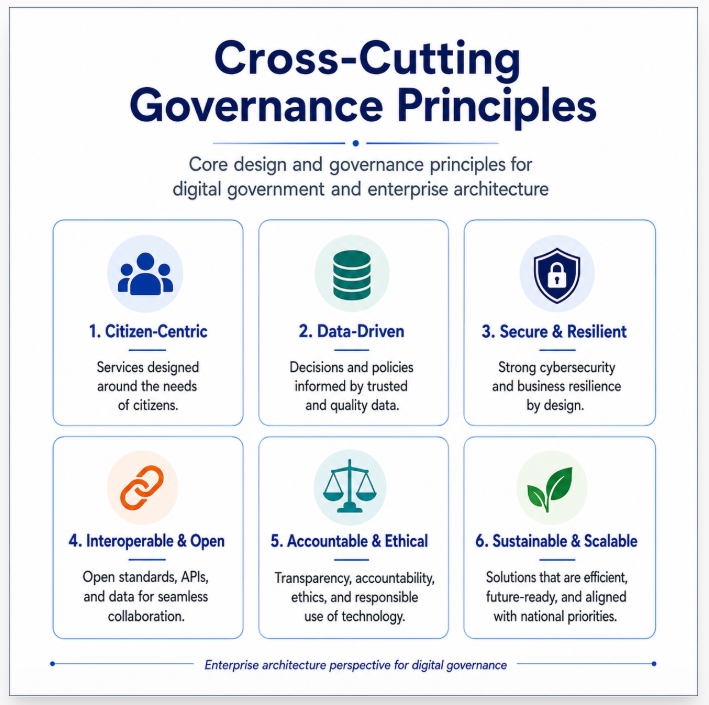
My main takeaway
Digital transformation is not just about building systems. It is about building a trusted digital ecosystem.
This requires alignment among laws, policies, platforms, data, people, processes, and governance. The challenge is not merely to be aware of these laws. The challenge is to understand how they interact and support one another.
Bottom line: Philippine digital laws and policies can be read as architecture drivers. When viewed together, they help Enterprise Architects, Solution Architects, technology leaders, government planners, and vendors design more coherent and trusted digital capabilities.